


No products in the cart.

Warm vs. Cool Colors: Choosing the Right Vibe for Every Room
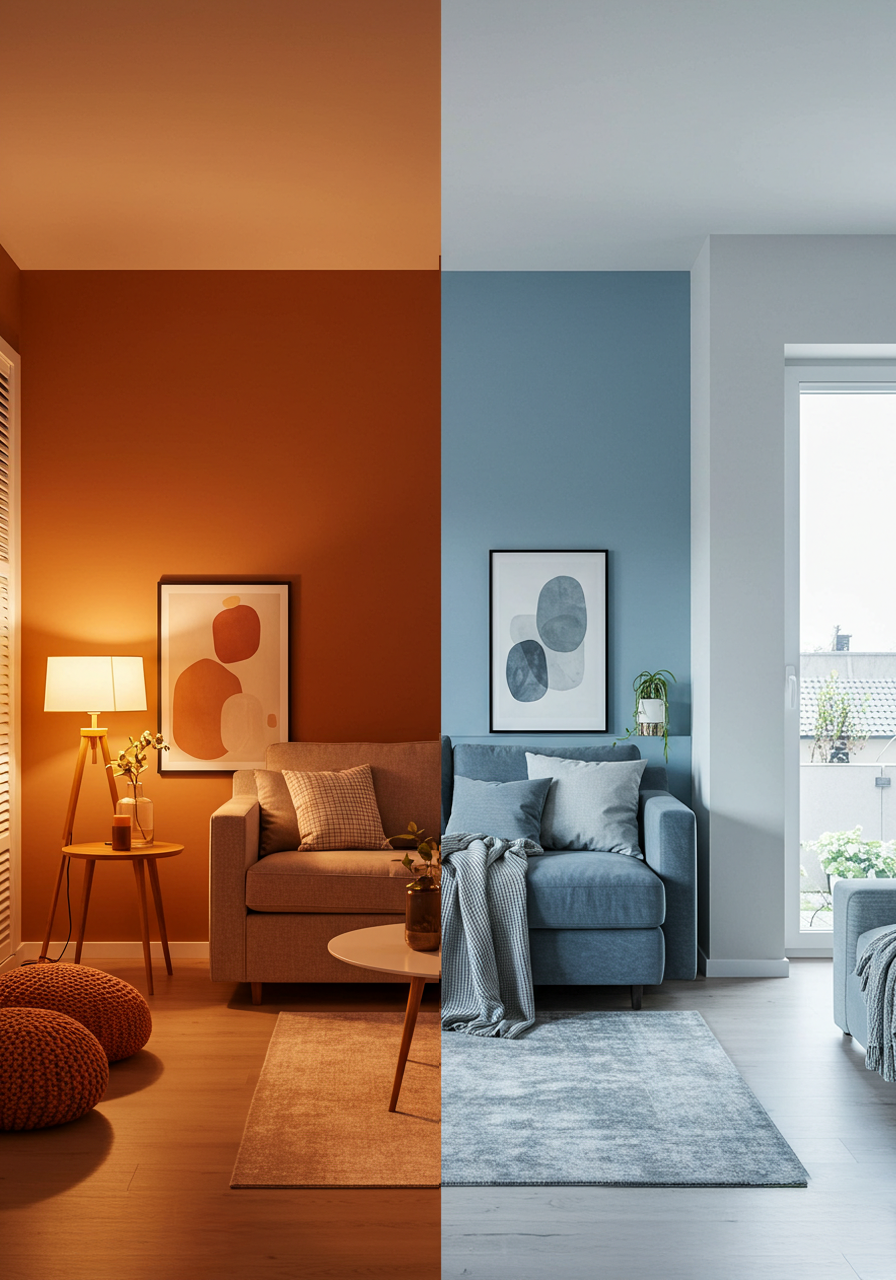
Warm vs. Cool Colors: How to Choose the Right Vibe for Every Room
When planning to repaint your home, most homeowners focus on finding their favorite colors — a shade that looks beautiful on the wall. But there’s a deeper science behind color selection that goes beyond personal taste. Colors can influence mood, affect room temperature perception, and even change how spacious a room feels.
Understanding the difference between warm and cool colors helps you design rooms with the right energy, comfort, and personality. Whether you want to create a calming retreat, a vibrant gathering space, or a productive work zone, your paint choices matter as much as your furniture.
Key Takeaways
- Warm colors like red, yellow, and orange create energy, coziness, and intimacy.
- Cool colors like blue, green, and purple bring calmness, balance, and relaxation.
- Light reflection and undertones play a vital role in how colors are perceived.
- Saudi sunlight affects how warm and cool colors appear during the day.
- Use warm and cool colors strategically to define zones and set moods.
The Science of Warm vs. Cool Colors
Colors are divided into two main families based on their temperature perception:
| Category | Examples | Emotional Effect | Best For |
|---|---|---|---|
| Warm Colors | Red, orange, yellow, terracotta, beige | Energizing, welcoming, cozy | Living rooms, dining areas, accent walls |
| Cool Colors | Blue, green, lavender, gray | Calming, refreshing, Spacious | Bedrooms, bathrooms, study areas |
Fun Fact:
Warm colors are often associated with sunsets, sand, and fire, while cool colors are linked to water, sky, and greenery.
Warm Colors: Bringing Energy and Comfort
Warm colors create a sense of closeness and excitement. They are ideal for areas where people gather and interact, as they stimulate conversation and activity.
Popular Warm Shades for Saudi Homes
- Sandy Beige and Taupe: Reflect the desert’s natural beauty, perfect for living rooms.
- Terracotta and Rust: Inspired by traditional Saudi architecture.
- Golden Yellow: Adds cheerfulness and light to darker rooms.
- Soft Coral or Peach: Brings warmth without overwhelming the space.
Ideal Uses
- Living Rooms: Encourage connection and energy during family gatherings.
- Dining Rooms: Stimulate appetite and conversation.
- Entryways: Create a welcoming first impression.
Cool Colors: Creating Calm and Balance
Cool colors bring tranquility and openness to a space. They work well in rooms designed for relaxation or focus, as they have a soothing psychological effect.
Popular Cool Shades for Saudi Homes
- Ocean Blue and Teal: Reflect the Red Sea’s calming hues.
- Sage Green: Natural and refreshing, ideal for bedrooms or home offices.
- Soft Lavender: Adds subtle luxury to bedrooms or nurseries.
- Cool Gray: Versatile and modern, perfect for minimalist spaces.
Ideal Uses
- Bedrooms: Promote restful sleep and relaxation.
- Bathrooms: Enhance the feeling of cleanliness and freshness.
- Study Area: Improve focus and mental clarity.
How Light Affects Color Perception
In Saudi Arabia, natural sunlight is intense, and it can dramatically change how colors look:
- Warm Colors: may appear more vibrant during midday sunlight.
- Cool Colors: can take on a duller tone in rooms with little natural light.
- North-facing rooms: Best for warm shades to counteract cool light.
- South-facing rooms: Benefit from cool colors to balance strong, warm sunlight.
Paintco Tip:
Always test paint samples at different times of day to see how light affects the final look.
Combining Warm and Cool Colors
Mixing warm and cool colors creates visual harmony and depth.
- Use warm shades for focal points (like accent walls or furniture).
- Apply cool shades for background areas to create balance.
- In open floor plans, warm and cool colors can define separate zones without using physical barriers.
| Room Layout | Warm Color Use | Cool Color Use |
|---|---|---|
| Living + Dining Combo | Accent wall or dining area | Main wall color |
| Bedroom + Study | Bedding or décor | Wall paint |
| Kitchen | Cabinets or island | Backsplash or walls |
Color Psychology and Room Function
Each room has a purpose, and your color palette should support that function.
Bedrooms
- Best Colors: Soft blues, greens, or lavenders (cool tones).
- Why: Promote relaxation and deeper sleep.
Living Rooms
- Best Colors: Sandy beige, terracotta, or soft coral (warm tones).
- Why: Encourage conversation and togetherness.
Kitchens
- Best Colors: Warm yellows or cool grays.
- Why: Warm colors stimulate appetite, while cool tones maintain balance.
Bathrooms
- Best Colors: Aqua blue, sage green, or light gray.
- Why: Enhance a clean, spa-like feeling.
Tips for Saudi Homes
- Cultural Aesthetics:Warm, earthy tones often reflect Saudi heritage, while cool shades bring a modern, international vibe.
- Climate Considerations:Cool colors help rooms feel refreshing in Saudi’s hot weather, while warm colors add comfort during cooler desert nights.
- Maintenance:Warm shades hide dust better, while cool shades may show marks and require washable finishes.
Finish Matters Too
The finish you choose impacts how warm and cool colors appear.
- Matte Finish:Softens both warm and cool shades, ideal for bedrooms.
- Satin Finish: Adds subtle sheen, perfect for high-traffic living rooms.
- Semi-Gloss: Makes cool colors appear brighter in kitchens and bathrooms.
Mistakes to Avoid
- Using too many warm colors: Can make spaces feel small and overwhelming.
- Over-relying on cool colors: May create a cold, uninviting atmosphere..
- Ignoring natural light: Colors may look completely different under Saudi sunlight.
- Forgetting about furniture: Wall colors should complement, not clash with décor.
Maintaining Warm and Cool Paint Colors
- Regular Cleaning: Use mild soap and soft cloths, especially for cool shades in kitchens or bathrooms.
- Touch-Ups: Keep extra paint for fixing scuffs and marks.
- Long-Term Planning: Neutral sandy tones offer flexibility if you want to update décor later.
FAQ
How do warm and cool colors affect room size perception?
Warm colors make rooms feel cozier and more intimate, while cool colors make spaces appear larger and more open.
Which colors work best for open-plan homes?
Use a mix of warm and cool shades to define different areas. For example, a warm terracotta dining space with cool gray living room walls creates balance.
How does Saudi sunlight influence color choice?
Bright sunlight can make warm shades feel overpowering. In sunny rooms, use cool tones to balance the light and reduce glare.
What’s the best approach for bedrooms shared by siblings with different tastes?
Use a neutral base color (like beige or soft gray) and add personalized accents in warm or cool shades through décor, bedding, and art.
Can I combine warm and cool colors in one small room?
Yes, but do it strategically. Use a cool shade for the main walls and a warm accent on smaller areas to avoid overwhelming the space.

Warm vs. Cool Colors: Choosing the Right Vibe for Every Room
Eco-Friendly Paint Choices in Saudi Arabia: Protect Your Health and the Planet
Eco-friendly paints with low or zero VOCs improve indoor air quality, reduce odors, and support Saudi Arabia’s Vision 2030 sustainability goals. These paints are ideal for homes, offices, and large-scale projects, offering durability and environmental benefits in the Kingdom’s harsh climate.
Key Takeaways
- Lower VOCs = cleaner indoor air and safer spaces for families.
- Perfect for KSA climate: UV- and heat-resistant water-based formulas.
- Support Vision 2030: Meet green building and ESG standards.
- Durable and washable, matching conventional paints’ performance.
- Clear labeling: Always check VOC levels and certifications.
Why Traditional Paints Can Be Harmful
Many conventional paints release Volatile Organic Compounds (VOCs) into the air, causing odors, irritation, and long-term health risks. Some also contain additives harmful to the environment, while their production processes generate greenhouse gases and waste. Did you know? VOCs can linger for weeks after painting, affecting indoor air quality in bedrooms, clinics, and schools.
What Makes Paint Eco-Friendly
- Low or Zero VOC: Reduces fumes and indoor pollution.
- Water-Based Technology: Quick drying, low odor, easy cleanup.
- Safe Ingredients: Sustainable pigments and fewer harsh chemicals.
- Recyclable Packaging: Minimizes waste.
- Verified Certifications: Check VOC values and eco labels.
Lorem ipsum dolor sit amet, consectetur adipiscing elit. Ut elit tellus, luctus nec ullamcorper mattis, pulvinar dapibus leo.
Lorem ipsum dolor sit amet, consectetur adipiscing elit. Ut elit tellus, luctus nec ullamcorper mattis, pulvinar dapibus leo.
Lorem ipsum dolor sit amet, consectetur adipiscing elit. Ut elit tellus, luctus nec ullamcorper mattis, pulvinar dapibus leo.